
ROYAL-BDWLED
Bed with LED headboard
A bed with an LED headboard. Grey. Double and Queen.
- Frame size
- Not listed yet. Ask before you buy, and measure your doorway first.
- Colours
- Grey
- Features
- LED headboard. Available in Double and Queen.
The frame decides how the room works, how much storage you get, and whether the bed is quiet. The mattress decides how you sleep. Buy them as two separate decisions. We sell mattresses as well as frames, and the range is not listed on the site yet, so ask in the showroom.
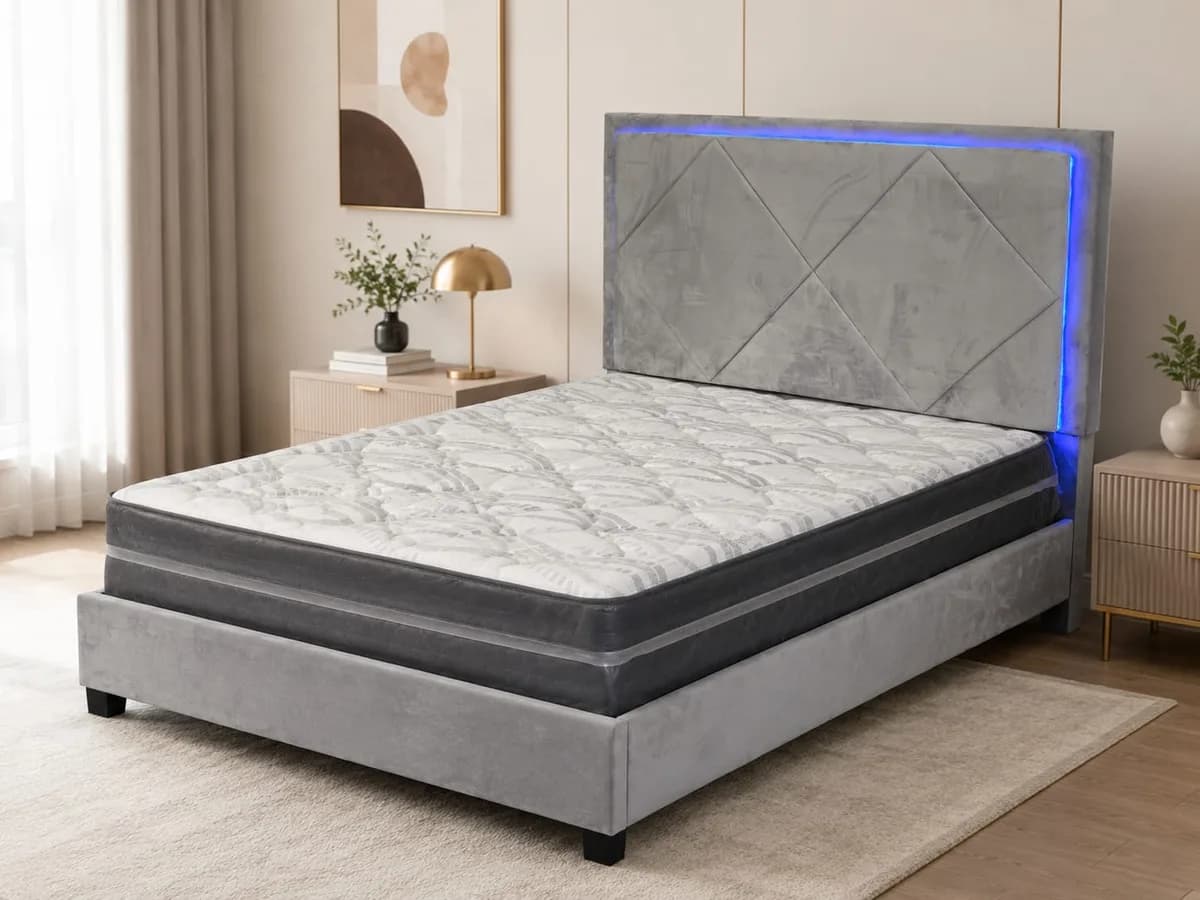
Frame measurements have not been supplied. A frame is wider and longer than the mattress it holds, so the mattress size is not the frame size and neither is guessed at here.
ROYAL-BDWLED
A bed with an LED headboard. Grey. Double and Queen.
ROYAL-BDWOLED
A bed with a plain upholstered headboard. Grey. Double, Queen and King.
A queen mattress is 152 by 203 cm, but a queen bed frame is usually 5 to 15 cm wider and longer than that, and more if it has a padded surround or a wide footboard. Measure the frame, not the mattress size, and then leave about 60 cm on at least one side and at the foot so you can walk round and make the bed. In a small room, pushing one side against a wall is a fair trade, as long as it is not the side somebody has to get out of at night.
Most modern frames use wooden slats, and the gap between them matters: for a foam or hybrid mattress, slats should be no more than 7 to 8 cm apart, or the mattress sags between them and can void its warranty. A solid platform base suits foam well. A traditional box spring adds height and a little give and is mostly used under sprung mattresses. Ask what the frame needs before you buy the mattress, because the two have to agree.
Drawers in the base are useful in a room with no cupboard, and they need clear floor beside the bed to open, which small rooms often do not have. An ottoman or lift up base uses the whole footprint and needs clearance above instead, so check the ceiling slope in a loft room. Open the mechanism yourself with the mattress on top if you can, because a gas lift that is hard to raise empty will be harder to raise loaded.
A headboard stops pillows sliding down the wall and stops the wall getting marked, and an upholstered one makes sitting up in bed to read comfortable. Check the height against the room, because a tall headboard under a sloped ceiling or a window is a problem you only notice once it is assembled. If the bed will sit under a window, a low or open headboard keeps the light.
Beds squeak at the joints, not in the middle. Metal frames with bolted joints tend to loosen over time and need tightening once or twice a year. Wooden frames with proper joinery stay quieter for longer. Push down on a corner in the showroom and listen. Then push down on the opposite corner, because a frame that is only fixed at four points will tell you about it.
Mattress sizes are standard in Canada. Frames are larger than the mattress they hold, so measure the frame.
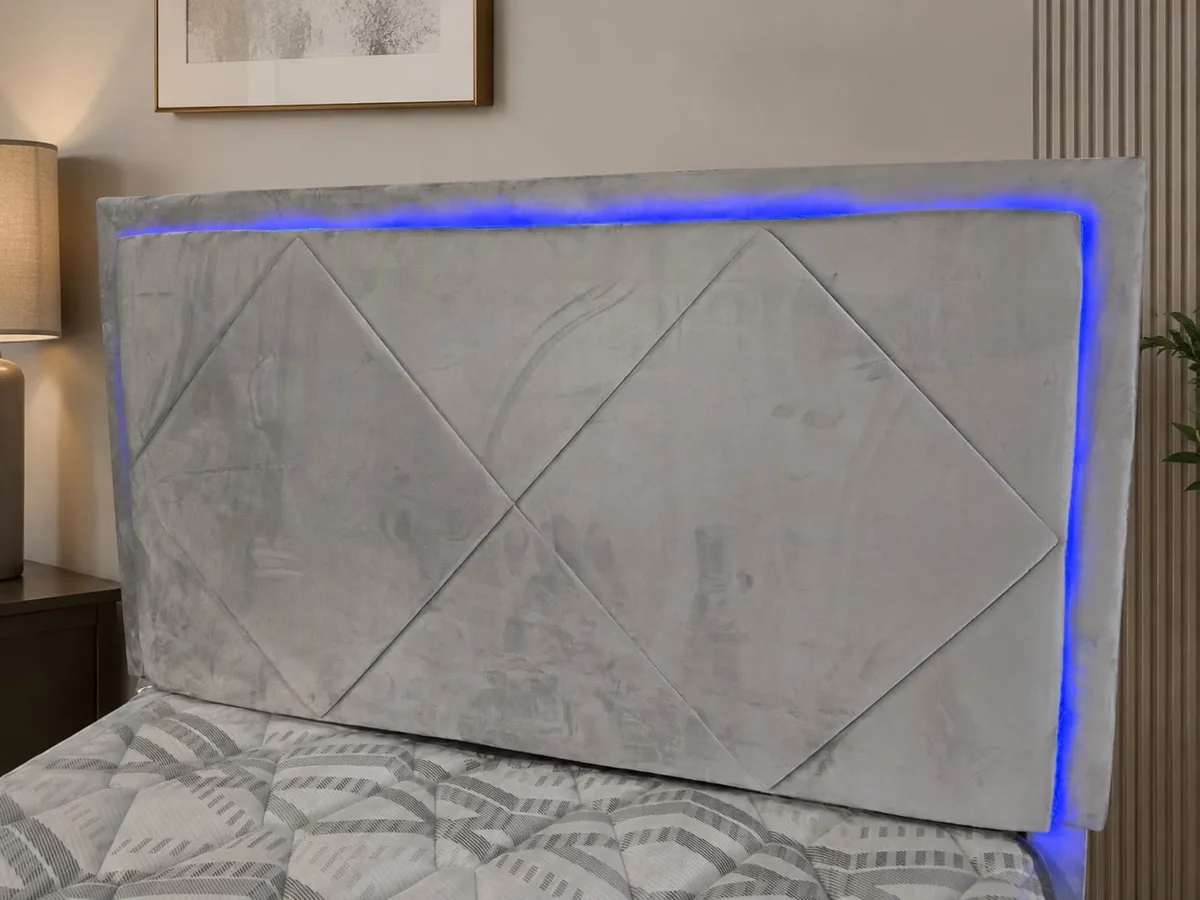
A queen mattress is 152 by 203 cm and the frame is usually a little larger again. Add about 60 cm at one side and at the foot for walking and making the bed, and measure against the smallest wall in the room.
Not with most modern frames. Slatted and platform bases support a mattress on their own. A box spring adds height and some give, and is mostly used under sprung mattresses. Check what the frame is built for.
No more than 7 to 8 cm for a foam or hybrid mattress. Wider gaps let the mattress sag between the slats, and some mattress warranties specifically require a maximum gap.
Often yes, but check which kind. Side drawers need clear floor beside the bed to open. A lift up base needs clearance above instead, which matters under a sloped ceiling.
Bring your measurements. The doorway, the turn at the top of the stairs, and the wall it has to go against. Those three numbers prevent most of the problems.