
ROYAL-DT7PW
Seven piece wood dining table
A seven piece dining table in wood.
- Size
- Not listed yet. Ask before you buy, and measure your doorway first.
- Materials
- Wood
- Features
- Seven pieces.
Most dining tables are bought a size too big. The room decides how many people can actually sit down, because a chair needs space behind it as well as at it.
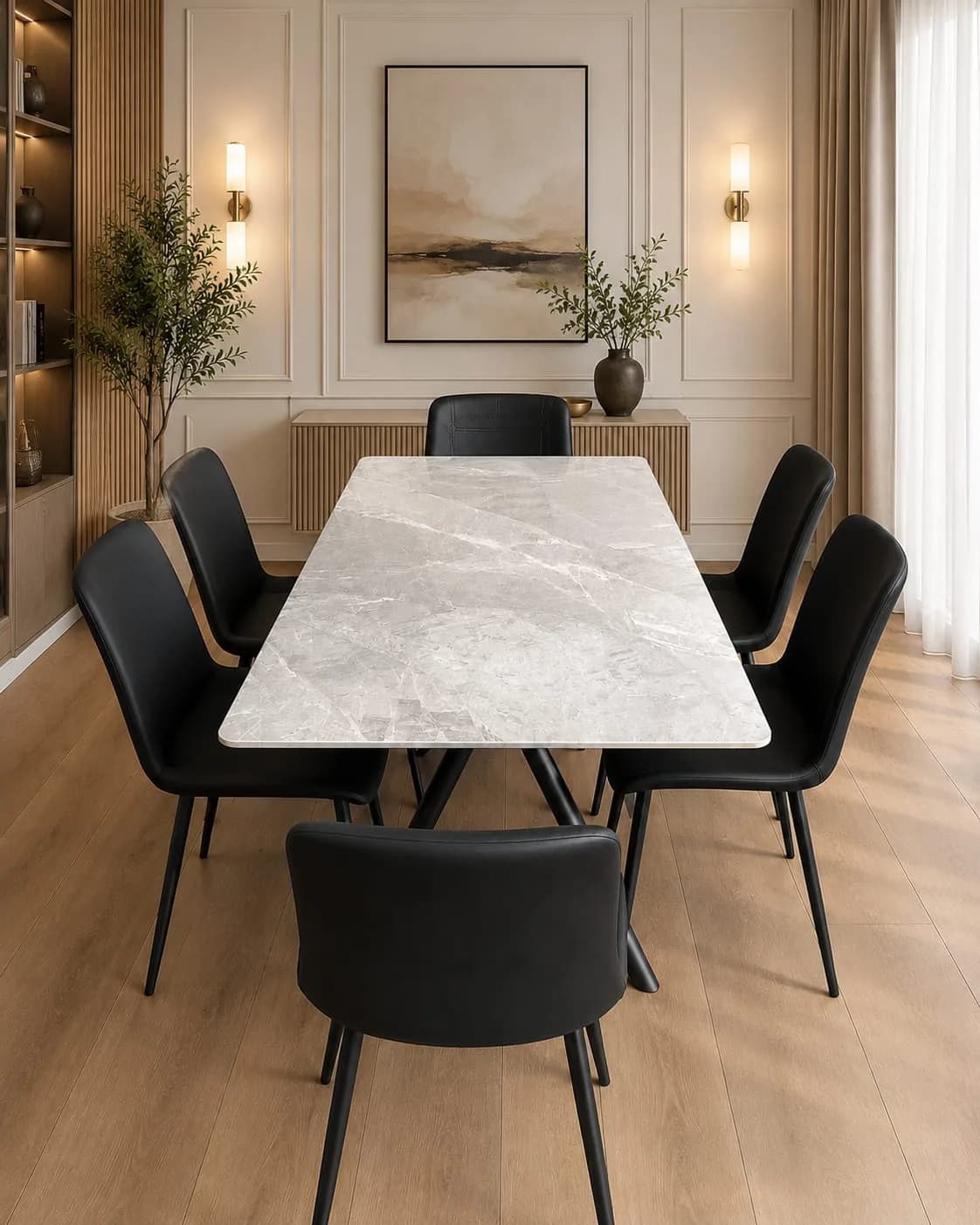
Both are sold as seven piece sets. What the seven pieces are has not been confirmed, so it is not stated here.
ROYAL-DT7PW
A seven piece dining table in wood.
ROYAL-DT7PM
A seven piece dining table in marble. Grey or black.
A chair needs about 75 cm behind it to be pulled out and sat in, and about 90 to 105 cm if somebody has to walk past while people are seated. Measure your room, subtract that clearance from all four sides, and what is left is the largest table that will actually work. This is why a table that looked fine in a showroom feels wrong at home: the showroom had four metres of space around it and your dining room has one.
Allow about 60 cm of table edge per person, and 75 cm if you want elbow room for long meals. A 1.5 metre rectangular table seats four comfortably and six at a push. A 1.8 metre table seats six properly. Round tables seat people more sociably and take less room in a square space: a 1.2 metre round table seats four, and a 1.4 metre one seats six with a squeeze. Do not count the corners of a rectangular table as seats, because nobody can sit at them.
An extending table is worth it if you have people over a few times a year and cannot spare the floor space the rest of the time. Ask how the leaf is stored, because a leaf that lives in a cupboard is a leaf that gets lost, while a butterfly leaf folded inside the table does not. Open and close the mechanism yourself. If it takes two people and a struggle in the showroom, it will take two people and a struggle at Christmas.
Solid wood can be sanded and refinished, marks and all, which is why an old wooden table can outlive several newer ones. Veneer over board looks the same and is lighter and cheaper, and it cannot be sanded back, so a deep scratch is permanent. Glass shows every fingerprint and is easy to clean. Stone and stone effect tops are heavy, cool to the touch and hard to chip but can stain if a spill sits. Match the top to how the table will be used, not to how it looks empty.
Chairs are half the price of a dining set and most of the experience. Sit properly, at a table, for longer than feels necessary. Check that the seat height leaves about 30 cm between the seat and the underside of the table, that the arms fit under the table if the chair has them, and that the back supports you when you lean. Upholstered seats are more comfortable and harder to clean, which is a real trade with young children.
Measure the room first and work backwards. The clearance figures are what turn a table size into a number of seats.
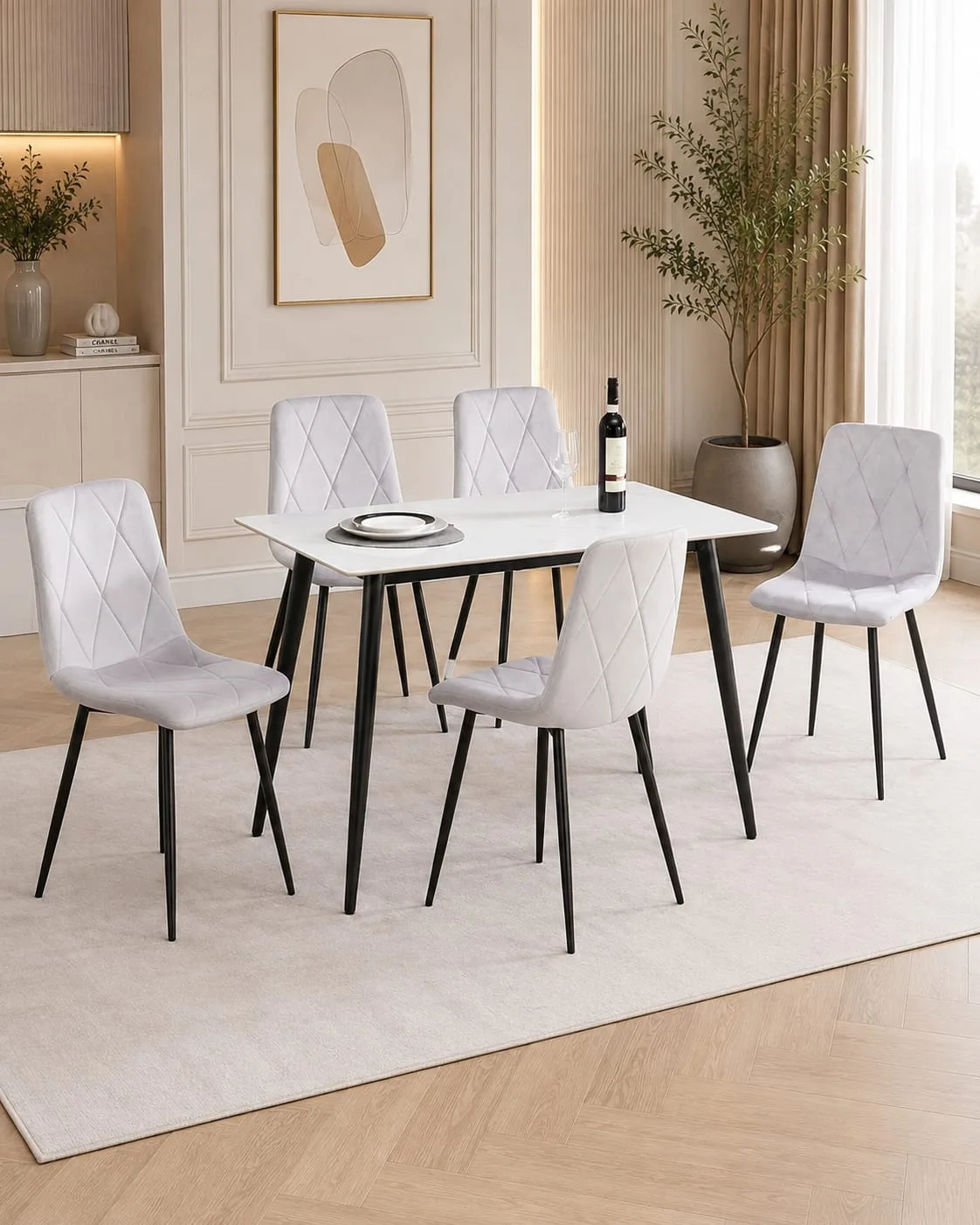
Measure the room, take 75 cm off each side for pulling chairs out, and more on any side people walk past. Whatever rectangle is left is your maximum. In a square room a round table usually seats the same number in less space.
Four comfortably, six at a push. Allow about 60 cm of table edge each, and do not count the corners as seats.
It is if you expect the table to take damage, because solid wood can be sanded and refinished and veneer cannot. If the table will be treated gently, veneer looks the same and costs less.
If you host a few times a year and cannot spare the space the rest of the time, yes. Try the mechanism yourself in the showroom, and ask where the leaf lives when it is not in use.
Bring your measurements. The doorway, the turn at the top of the stairs, and the wall it has to go against. Those three numbers prevent most of the problems.