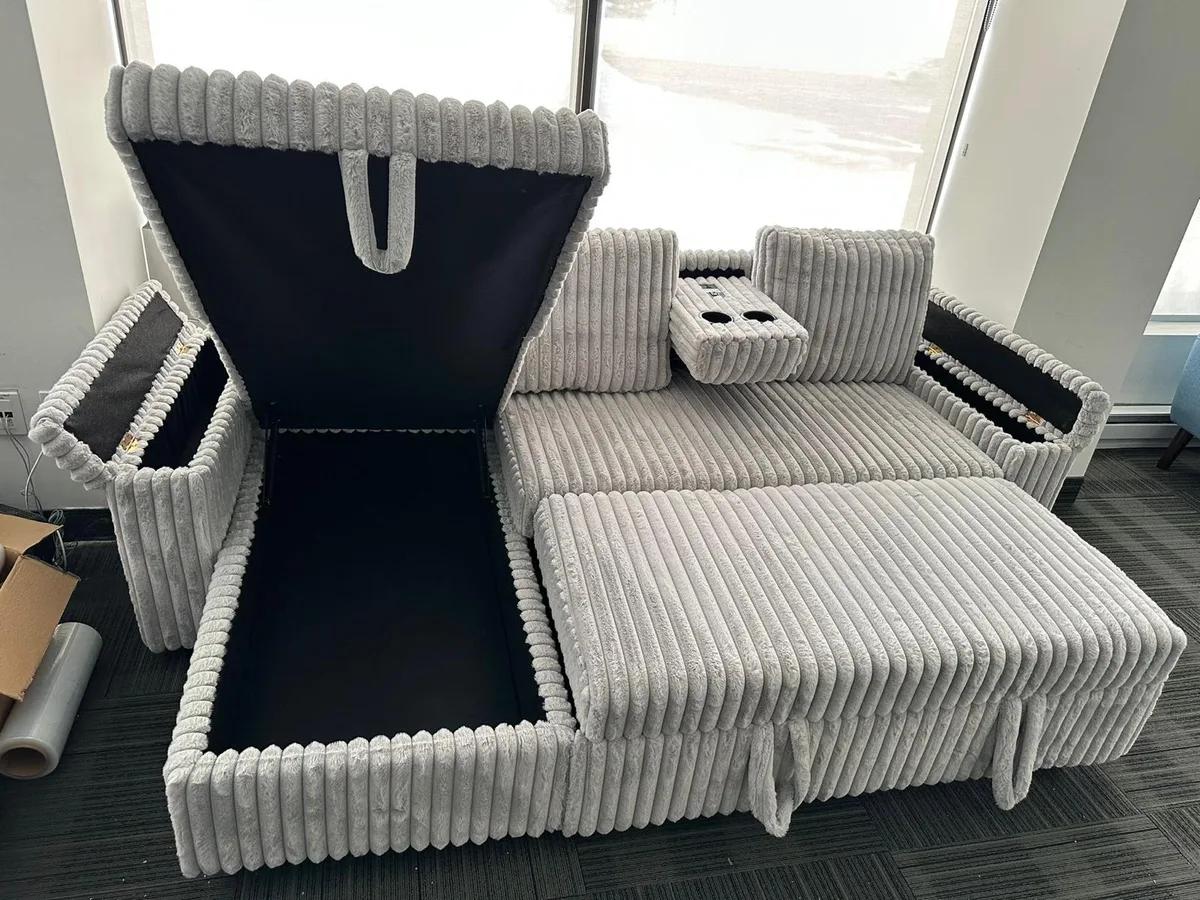
Measure the way in, not just the room
A sofa that fits your living room can still fail at the front door. Measure the narrowest point on the way in: the doorway, the turn at the top of the stairs, the lift, the corner of a hallway. Write down the width and the height of each one. Then measure the wall the sofa will sit against, and leave room to walk past it. Most three seat sofas need about 2.1 to 2.3 metres of clear wall. If the way in is tight, a two piece sectional or a sofa with legs that unscrew will get in where a single frame will not.
How many seats you actually need
Seat counts describe cushions, not people. A three seat sofa with two cushions seats two adults comfortably and three at a squeeze. Think about how the seating you have now gets used. If one person always stretches out, a chaise on one end is worth more than an extra seat. If you have people over often, two smaller pieces facing each other work better than one long one against a wall. Buying the biggest sofa that fits is a common mistake, and it is the one that makes a room feel smaller than it is.
What holds it up
The frame is the part you cannot see and the part that decides how long the sofa lasts. Kiln dried hardwood is the sturdiest. Plywood is lighter and costs less, and a good plywood frame will outlast a poor hardwood one. Ask what the frame is made of. Then sit down hard in the middle, and again on the front edge of the seat. It should not creak, shift, or feel hollow. Lift one end off the floor. A sofa that feels weightless usually is.
Cushions, and how they age
Foam cushions hold their shape and feel firm from the start. Feather and down feel softer, need plumping, and flatten in the spots you use most. A foam core wrapped in fibre or down sits between the two and is the most common thing you will find. Whichever you choose, ask whether the covers unzip. Being able to take a cover off and clean it is the difference between a sofa that looks tired in two years and one that does not.
Fabric or leather
Fabric is warmer to sit on and comes in more colours. Tight flat weaves hide wear better than loose weaves and pale solids. If you have a dog or small children, ask about the rub count and whether the fabric has been treated. Leather costs more at the start, wipes clean, and softens with use rather than wearing out. Bonded leather is not leather and it will peel, usually within a few years. If a label says bonded, or leather match, ask exactly which parts of the sofa are real hide.
Sit on it for longer than feels natural
Give it five minutes, in the position you actually sit in at home. Feel where the back meets your shoulders and whether your feet reach the floor. Seat height and seat depth decide comfort more than firmness does. A deep seat is right if you curl up and wrong if you sit upright with a laptop. None of this can be worked out from a photograph, which is the main argument for coming in.